Culture is Free

Archiving Culture

An online magazine archiving music, art and community worldwide

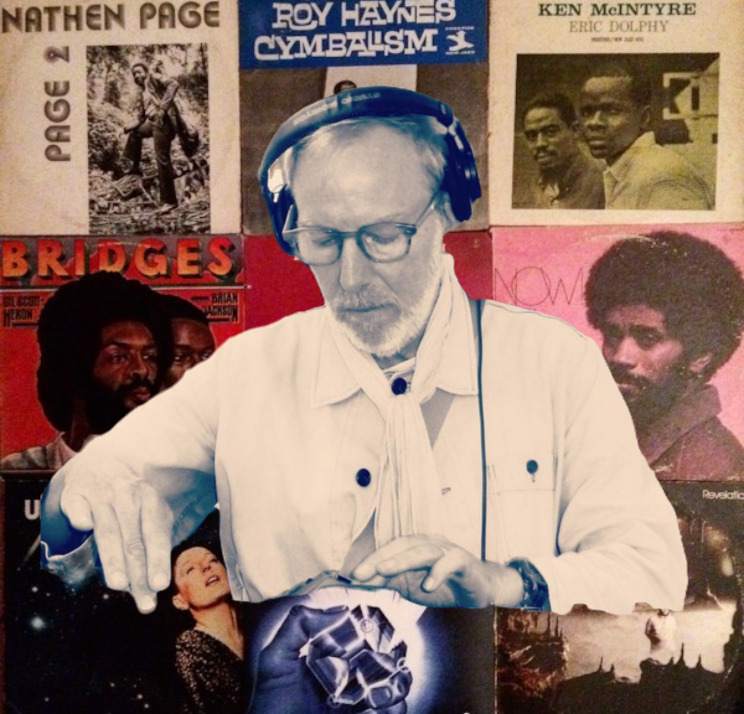
  • Rebirth of Cool – Questions with Patrick Forge

    The sorcerer of sound – playing and sharing undiscovered gems for us all to boogie to. DJ and Broadcaster Patrick Forge is a legendary pioneer that celebrates the origins of great music. He is the rebirth of cool.

    A true connoisseur, what do you love about music?

    From an early age music fired my imagination, I discovered that it offered the chance to feel an exalted state, and I’ve spent my life chasing that feeling. My fascination with and passion for music and the culture it spawns eventually led me to place where I had the chance to share my love of music and find my place within it, and I have deep gratitude for having had that opportunity.

    Maybe I chose this path, but it’s vastly apparent to me that I’ve been very lucky, or to put it in more cosmic terms, the stars aligned and the universe said yes. In that sense it feels more like music chose me.

    There was a period in my life when I went from being a frustrated and failing musician to working in Soho’s Reckless Records, nabbing myself a radio show on London’s hottest pirate radio Kiss FM, and starting a residency with Gilles Peterson at Dingwalls. Which all happened in a matter of months.

    Of course the path I’ve trodden since then has in many ways dictated the terms of my relationship with music, but I try not to let that get in the way of my  fundamental love for music. I don’t want it to kill the goosebumps! Those moments when you’re just staggered with disbelief at how powerful music is and the way it makes you feel.

    Has the movement changed or your place within it? How do you connect with your audience?

    Music and culture are constantly changing and evolving, and I always try to embrace the philosophy that all change is good, even when it seems initially detrimental. There’s always something new to learn!

    My career has spanned the transition into the digital age and it’s always interesting to compare and contrast between then and now. From the days when clubs were promoted with flyers and word of mouth, when radio shows had a vital role to play, and knowledge was hard won from books, magazines and record sleeves. To the digital world where everything is instantly accessible, and there are always infinite possibilities.

    For everything gained there is always something lost too, it’s inevitable. However one thing I believe to be true, is that creativity is often stifled by the ease of the digital age. Whether it’s carrying thousands of tunes for your DJ set in a memory stick, or trawling through the endless options of digital music production; it can be overwhelming and stifling.

    Less is very often more and working within narrower parameters means there’s less chance of getting lost! Less options often fosters greater creativity.

    Social media has of course radically changed the relationship between DJ and audience, mainly in good ways, there’s always a sense of community there, and so many things and ways to share. However, in a club, it’s the same as it ever was, (providing folk aren’t too glued to their screens), as it’s about an energetic connection through the music. 

    Having worked with such an array of artists, do you have a favourite memory?

    Sometimes I forget that people I’ve known for years, whether musicians, DJs or producers are artists in other people’s perceptions. Which is not to undermine or diminish what they do, it’s just that I’m lucky enough to know them as regular, flawed but brilliant humans.

    In that respect from my generation, I would always big-up Kaidi Tatham whose music I love, and though I don’t see him that often we share a language of appreciation for many of the same things. Kaidi is a very special musician and producer, (and DJ!) and that excitement, that spirit, that inspirational feeling that music offers flows out of him constantly.

    I’ve also been lucky enough to meet and sometimes also interview some legendary artists, many of whom are no longer with us. I even met James Brown! But people like Mark Murphy and Terry Callier, who were special for our scene and whose careers we helped revive and prolong I feel particularly strongly about. They never disappointed, and were as people everything their art suggested they might be. Which isn’t always the case!

    They say “never meet your heroes” and it’s a cautionary note people often ignore, setting themselves up to be disappointed, sometimes there’s a huge gulf between the flawless art someone creates and the rather compromised human being behind it.

    What year made the biggest impression?

    This question just makes me feel old, as all the years that spring to mind are a long time ago. It also makes me feel slightly depressed as I reflect on the lack such huge tectonic shifts in recent times. It also makes me feel incredibly blessed to have been born at a time to have been witness to and a part of those changes.

    I can’t settle on one year, so here’s three. 1977, I was still at school, the advent of punk was something that ripped through an increasingly staid, stale and outdated culture, no matter what you made of the music, the attitude was everything. It was rebellious and empowering and reached out to the disaffected, whoever and wherever you were.

    1982, I often cite the early eighties as being the last throes of a genuine counter culture, and also one of the most exciting periods in terms of musical creativity and evolution. It was all blueprinted back then, from electronic dance music to the reassimilation of jazz, from the ambient and abstract to the exemplars of eclectic pop.

    1988, the second Summer Of Love, the year my DJ career began to gather momentum, the acid jazz “phenomenon” and a breathless ride at a time when it felt like things were moving so fast it was nigh on impossible to take stock. 

    Talking Loud & Sayin Something in Dingwalls, London, 1990 photo by Adam Friedman.

    Do you have a favourite DJ?

    My favourite DJs are also those who I owe the most to, and I have learned immeasurably from. Gilles Peterson, who I worked alongside for many years and through many memorable sessions, he taught me so much about being brave as a selector, the light and shade, tension and release of constructing a set.

    Paul Trouble Anderson (RIP) whose encouragement was priceless and enthusiasm infectious;  you can only really learn about “the dance” from a dancer, and PTA was not only one of the greatest DJs he was also a superlative dancer. There’s a much misunderstood word in our lexicon, and that is boogie. Some people think of it as a genre, as a style of music, and that’s all well and good, but beyond that, boogie is a way to dance, and beyond that, boogie is a feeling. Paul taught me about boogie.

    Thirdly Phil Asher (RIP) who I hooked up with towards the end of the 90s when we ran a night called Inspiration Information together. Although our paths diverged in his later years, I miss him terribly. More than anything I’m grateful for the way he brought me back into myself and encouraged me to stay true to what I believe in. 

    And I think the DJ I most admire is Theo Parrish, I was amongst a bunch of DJs at the sadly no longer Southern Soul Festival in Montenegro, and we were just shaking our heads, next level is next level! 

    Of course there are many DJs who I admire and am excited by, some huge names and some barely known. The point being that we are all (as DJs) conduits for something far bigger and more important than ourselves, music.

    From starting out to now – are the same things important to you?

    Of course priorities shift as you age and hopefully grow, the responsibilities of parenthood and the perspective that creates changes everything. I’m definitely more reflective, less arrogant, more at peace with who I am. I try to see the bigger picture.

    I’m not a hungry young man anymore, I’m a hungry old man! It’s just that my taste has evolved and my understanding deepened. Yet no matter what, music is a constant for me. 

    Between 1987 and 2008 (apart from a year’s gap when the station transitioned from pirate to legal) I did a weekly radio show for Kiss FM. Unlike most of the original pirate legends, Norman Jay, Jazzie B etc. I neither fell out with or was pushed out by Kiss, until I was the only survivor from the original pirate crew.

    Then I left the station and moved to Okinawa, Japan. I wasn’t doing much club DJing, and having stopped broadcasting it was such a huge relief, I was able to have a complete reset of my relationship with music, without that pressure.

    I’m extremely grateful for that period, it definitely re-stoked my passion, I listened differently, things became clearer to me about what I loved about music, the various threads of my taste and how they wove together. When I moved back to London in 2010(?) I think I’d become a better DJ… anyway I didn’t start doing radio again until December 2012. 

    My saving grace in life has been rediscovering a passion for swimming at the end of my twenties, I’d become quite disconnected from my body, and unfit! So I truly needed to get back to where I felt most at home, in the water.

    I’m definitely a water person… and as a very wise woman once told me, “swimming is your goddess”, and that’s true in that sense that for me swimming is as much a spiritual practice as it is exercise.

    I’m pretty dedicated and disciplined as a swimmer, now all I want to achieve in life is to find a way to apply those qualities to writing a book (about music). I also want to get out there and DJ as much as I can whilst I still feel able and energised to do so! 
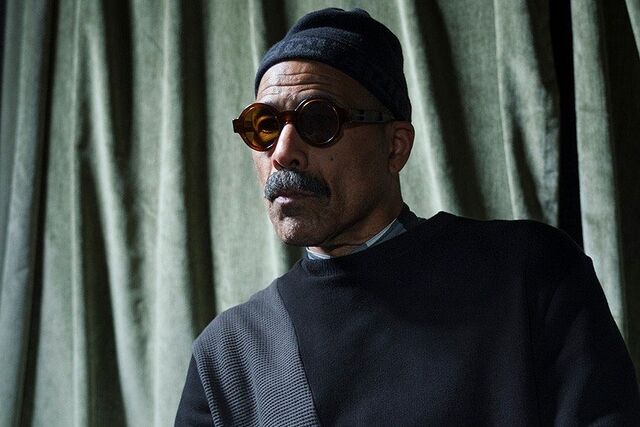
  • Legendary – Questions with Kahil El’Zabar

    Image © Niclas Weber

    Legendary jazz multi-instrumentalist and composer, Kahil El’Zabar has been at the forefront of the spiritual jazz, avant-garde scene since the 70s. He’s performed with legends such as Stevie Wonder, Nina Simone and Pharoah Sanders.

    A jazz innovator, Kahil’s past and present music embraces the traditional and spiritual sounds of our African Ancestors.

    Can you tell us what it was like to create and perform in the 70’s?

    The 1970’s were a very exciting time to create music! This period was an extension of late 60’s, where spiritual consciousness was the epicenter of creative thought and expression.

    The arts were the focus for an entire generation of musicians that I was fortunate to be a part of. Whether it were jazz bands like Pharoah Sander’s groups or popular music bands like Earth Wind and Fire, all the musicians were striving for a greater sense of being through their music.

    One special memory is when we had the opportunity to play and open for Alice Coltrane, Sun Ra, and Pharoah’s bands at the Auditorium Theater in Chicago in 1970. There were 4,000 plus in attendance that night, with everyone focused and committed to the Spirit.

    Those days were quite special. I have tried to contain and convey that kind of energy in my work from then to now.

    What impact has Jazz had on your life? Yesterday, today and tomorrow?

    This music is at the core of my being, I knew at a very young that if I wanted to really play this music , I would have to completely embrace the life that comes with it and from it. I had many noble examples around to look up to and immolate.

    Where do you drawn energy from?

    I draw energy through the Spirit. This enables me to tap into the ancestors and listen and feel things deeply. I then try to share with others, heartfelt offerings.

    How important is the message of change?

    If you don’t change constantly, you’ll develop a tendency to be stagnant. I want be fresh and completely in the moment, which only happens when you let go of all the things that you think you know.

  • Soulstress – Questions with Jessica Jolia

    Your voice is warm and uplifting – how does it make you feel when you are creating music?

    Music has always been my happy place. It brings me great joy to be able to sing, write and arrange music, and to perform. Performing is an aspect I particularly enjoy, because I appreciate the opportunity to connect with others in such an intimate, unique way.

    I think music can be very healing, so as I hope to positively impact others through it, I recognize that it impacts me in wonderful ways too.

    How has your background/experiences, influenced the music you make and want to make?

    Life often has lots of twists and turns, some expected and some out of the blue, and I think the many things I have experienced in my life, both difficult and wonderful, have influenced me to make music that is authentic and sincere.

    I find that type of music to be most relatable, and I always aim for my songs to allow for easy connection.

    What is your dream?

    My goal is to positively impact as many people as I can reach through music. I don’t aspire to be famous, though I realize that it’s always a possibility in this pursuit, but I’d rather my music do great things and my personal life maintain as much normalcy as possible.

    If your music was a season, what would it be and why?

    My music would definitely be Fall. It’s my favorite season, and most notably a season of beautiful change. When I write songs, I typically write from a very current perspective.

    Those thoughts and ideas tend to evolve over the years as life blesses me with experience, which can get quite interesting. It’s very revealing to reflect on my life in that way, but it also shows just how much I’m constantly working to become a better human.

  • Music Connoisseur – Questions with DJ Raphael

    A music connoisseur, it’s no surprise that DJ Raphael has a huge internet following, with listeners eagerly awaiting the next uploaded mix.

    From early morning through to late evening – DJ Raphael has a mix to relax, uplift and inspire! Jazzy, soulful, funky tracks from known and hard to find artists, each collection takes you on a musical journey.

    How do you find all of the amazing tracks that make your mixes?

    A lot of listening! I spend a lot of my free time just listening to a whole bunch of music. It could be from online radio shows, social media, online streaming services and pirate radio.

    I’ve always found the process of listening to and discovering new music just as joyful as making mixes, it takes some time and patience but it’s always worth it in my eyes.

    Dj Raphael playing out to a crowd - Connoisseur

    What is it that makes a good song stand out to you?

    There are a few things I think, production has always been something I value along with lyrics and the message of the song. Most importantly though I think it’s a feeling, I want music to make me feel something when I listen to it. It can be any emotion but if it moves me, I want it to have the same effect when other people listen.

    It’s hard to pinpoint because everyone’s different, but for me I would say its soulful music that makes me feel something. I value artists with their own voices that aren’t afraid to push boundaries as well, originality and uniqueness are also key in my opinion.

    Who is your favourite artist past or present? What inspires you to create?

    I don’t think I can narrow it down to one artist, there’s too many to mention! There’s so many that I feel have subconsciously influenced what I listen to and what other artists create.

    I have to mention J Dilla, Erykah Badu, Roy Ayers, A Tribe Called Quest and probably Robert Glasper as some of the major artists that first paved the way for me when I was younger and then through them, I’ve discovered a whole lot more.

    There’s so many more I could mention though!

    DJ Raphael dj-ing in front of records - Music Connoisseur

    In terms of inspiration to create, I think for me it’s just trying to share that feeling of a new discovery or a recent pick up that blew my mind. I’ve always been a creative person and these mixes have been a great way for me to communicate and express myself outside of the everyday.

    What is your process to making a mix?

    There’s no real set process I don’t think, its often quite spontaneous and again based a lot on what I’m feeling at the time of making a mix. I usually spend a while compiling tracks I want to use and then begin the process.

    I usually record everything even if I’m messing around because it might capture something in the moment. I have to be in the right mood to make a mix as well. If I’m not feeling it, the mix is usually ends up being bland and empty.

    What would the world be like without music?

    Unimaginable!

    Do you have a favourite mix you have put together and why?

    This is another tough question! Each mix is almost like a diary entry of my life and a timestamp of where I was and what I was doing when I made the mix.

    I always love my first ever chilled hip hop and neo soul mix I released on YouTube, it’s so raw and I thought no one would listen to it but it ended up being one of my most listened to mixes.

    I also really enjoyed making the soulful house mix #10 and people seemed to like that one too. There’s a few others that stand out as well but I love them all in different ways and for different reasons.

    DJ Raphael holding Youtube sign - Connoisseur

     If you could pick one song which embodies your spirit what would it be?

    Again, so many to mention! I feel like this often changes depending on what mood I’m in and where I am. I always find myself going back to the same tracks though, one of them would definitely be ‘Chill Pill’ by Hawk House, another ‘Little Boy’ by Omar and the other is probably ‘Piece of Mind’ by Idris Muhammad.

    A fairly varied selection but they’re definitely tunes I could listen to for a while and that generally embody my spirit.

  • Pioneer – Questions with Jamel Shabazz

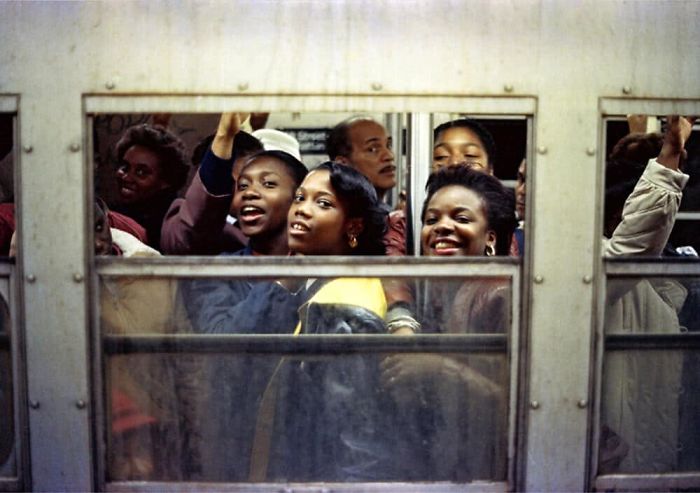
    Heart, soul and community. Pioneer. Jamel Shabazz is a photographer who showcases street style in 1980s New York. Each photo beautifully captures his community with pride. At a time of tension and poverty, Jamel Shabazz documented strength, love and the growing potential of the youth.

    Not only an amazing photographer, but a mentor who’s photographs challenge the history of violence and represent culture to inspire and empower generations.

    How has New York treated you, how has your environment influenced your work?

    New York is the cornerstone of the foundation for which I stand on today. The environment that I grew up in, had a huge influence on my creative process. For example, Prospect Park, in the Flatbush section of Brooklyn is a special place of mine that I like to refer to as “An Oasis in Brooklyn”.

    It became a space that I would visit throughout my life starting from when I was very young to the present, that was and still is a place I go to escape the hardships of the concert jungle, while seeking serenity.

    The park itself which stretches over 585 acres, is filled with picture perfect landscapes full of lush greenery, lakes, hills, wildlife, and a concert hall, that became my personal space where I would take thousands of photographs during a 40-year span.

    What I love most about the park is its diverse and wide range of subject matter that can be seen on any given day. During the early 1980s, I would take a number of my friends from the local high school there after class and have impromptu photo sessions, using the trees and lakes as natural backdrops.

    This organic environment created a unique feel to these images and upon examining the prints from those sessions, one would never know where we were taken, less lone in Brooklyn.

    Another environment that has had a major influence on my work is the Lower East Side of Manhattan, also known as “Delancey Street”. Unlike the tranquility of Prospect Park, this area is full of concrete, noise, and large crowds of shoppers on most days. Since the 1970s, Delancey Street was the shopping district where one could find the latest urban styles, at very reasonable prices.

    Most of the subjects that are fashionably dressed in many of my photographs from the 70s and 80s, purchased their clothing on Delancey Street; from footwear, sheepskin and leather bombers to Cazal glasses. As a photographer that was an ideal place to capture great photos, because there was always plenty of subject matter that I could identify with.

    Besides Prospect Park, some of my most iconic photographs were taken in that area. Because that old feel of the 70s still exists today, practically all of my commissioned fashion work is made on there, however it is slowly fading away with each new day.

    You served in the U.S. Army, did your experiences have an impact on your creativity? 

    Great question. While stationed in West Germany during moments of solitude, especially on lone guard duty I would often heavily reflect on life back in Brooklyn. I would think about all of my friends, along with trying to visualize what the buses, trains and streets looked like.

    It was during instances of this nature, that I realized that I never wanted to be without memory, so when I returned back to the states with a new perspective on life along with a new camera, I embarked upon a journey documenting all of the things I would often reflect on during my time overseas.    

    You have created many iconic images, what was and is your vision? Has it changed? 

    My primary vision during my early stages of development in the craft was to document the history and culture of life in New York City. I wanted to capture compelling moments that provoked thought and created opportunities for me to use the language of photography to connect with young people.

    Today my vision and objectives are the same, but now I have extended my journey throughout the country and around the globe.

    In your opinion, what is the difference between fashion and style?

    Another great question! Fashion in my opinion is the product, but style is how you define the fashion.  

    Black youth have been beautifully captured in your photography, how can we uplift and inspire the next generation? 

    Our youth are in great danger today like no other time in history. They have been born into a world that does not take to kindly to them. Their parents and grandparents in many cases, suffered during the AIDS and Crack epidemics, along with the war on drugs, racial profiling and mass incarceration. Many fell victim to an inadequate education, foster care and fratricide.

    Personally, I am pained by the countless videos that are being uploaded each day that show these graphic and terrible fights that young people are having with each other, with no regard for life. Back in the day you would only see males engaged in such activities, but now females alongside their male counterparts are fighting other groups that look just like them. 

    A lot of these altercations are taking place in the community where young children are witnessing this vicious behavior and rarely do you find anyone breaking up these fights. In many cases, the bystanders are only interested in video taping these situations so they could be uploaded to social media and shown to the entire world. I feel as a people, we are being set up for self- destruction.

    Gangs have now replaced the traditional family and violence and negative behavior are celebrated and rewarded on both television and in the music and film industry. We need to bring back the consciousness in hip hop that addressed social and political issues. 

    We also need all hands on deck, including all of the conscious artists regardless of genres for they have the magnetic attraction to get the attention of the younger generation, using their talents and platforms to mentor, engage the youth and give them guidance.

    The community as a whole must put away their fear and be proactive in trying to reach our youth. It is not an easy task, for there are other pressing issues like unemployment and an abundance of guns and drugs that are readily available on the streets.

    The task is challenging, but the clock is ticking and these times are very serious especially, now as we have to contend with those issues, toppled with the corona virus epidemic.

    There is an unprecedented amount of sickness and death in our community that has claimed the lives of thousands of people of color, many of them being elders and city workers who are often on the front lines that serve as the cornerstones of their families. We are in a state of emergency.

    The president has a disdain for people of color and racial hatred around the globe is on the rise. Again, we need all hands on deck like never before. As I type these words, the song “Self Destruction” by The Stop The Violence Movement back in 1991, resonates in my head. That message and the movement is of utter urgency today.   

    *all images courtesy of Jamel Shabazz

  • Impressive – Questions with Gnarly

    Producer and DJ, Gnarly is known for her impressive live finger drumming performances. Her weapon of choice is the Native Instruments Maschine, where she creates jazzy, soulful beats with a helping of funk.

    Her skills in music tech are vast and Gnarly is the lead Mix and Mastering Engineer post-production for the UK Beatbox Championships.

    What was the first album you bought and how do you feel about it now you are a producer? 

    To be honest I don’t remember the first album I bought. My sister used to buy a lot of tapes and CDs when I was a kid and she was a teenager.

    I remember spending hours making mixtapes /mix CDs from them of my favourite selections including TLC, Eminem, Blink 182 and Aaliyah to name a few. I don’t remember when I made the transition from listening to her music to buying my own. It seems like such an archaic way to listen to music now by having a physical copy.

    Most of the music you’d listen to in those days was chart music and it would be a dream to appear on Top of the Pops. With the internet, anyone can distribute their records now and have them heard all over the world. 

    Where do your ideas come from before you make a track? 

    Sometimes I’ll hear a song or sound in daily life that will inspire me such as music in a game or a line in a TV show or a post on Instagram.

    Other times I like to sit and actively listen to music for hours to draw inspiration from. I like to spend a lot of time experimenting, sometimes it turns out great sometimes it doesn’t. 

    Do you have a favourite performance of yours? 

    My favourite performance was being in the Finger Drumming Competition at Sample Music Festival in Berlin. It was my first international gig and first time in the scene, performing for people that were there specifically to see Finger Drumming. I got to network with a lot of other finger drummers too which was really cool.

    Are there any artists that you draw inspiration from? 

    Lido is my biggest inspiration. He’s a multi-instrumental live performing producer. His beats are kind of future RnB. Music that is full of emotion and well executed. Seeing someone create and perform with such good energy inspires and makes me want to level up.

    Do you have any advice for aspiring musicians and producers? 

    Stay consistent, practice daily and make an effort to be the best you can be. Set goals for yourself and be determined to achieve them.

  • Lyrical Master – Questions with O’hene Savant

    A powerful wordsmith and lyrical master, O’hene Savant‘s passion and skill is undeniable. A super duper talented lyricist, producer, and multi-instrumentalist.

    What in nature inspires you and why?

    All of nature. Sound, colours, silence. The wind, the rain, the sun, the sky and even things that are nature that we tend not to think of as nature. Like our minds. Art and human creations are not typically seen as “nature” but what is more natural than us humans expressing ourselves.

    Is there a person/place or moment that has defined your creative path?

    There is no person or place that has defined my creative path, because everywhere I have ever lived or even visited has contributed to my creativity. As a spiritual person, I recognize that I can be anywhere at any given time.

    What is your superpower? How do you intend to use it?

    My superpower is my ability to dissect things and learn them quickly. I plan on continuing to use it to propagate highly art from my community to the world, because culture changes minds, and minds changed are changed people, and changed people, change things.

    If you could go back to the future, what message would you take?

    If I could go to the future, if I am understanding you right. I would take the message of creativity.

    It is the closest thing to being godly. Being creative. This is why there is a saying “An idle mind, is the devil’s workshop. We need to be creative. It not only at its highest level gives insight, but it also gives us purpose, and what’s life without purpose?

    *If it’s okay, I would like to thank the interviewer for preserving the art of the interview. Your role is valuable and many are not recognizing the importance of legacy these days. People like yourself are the keepers of the culture and in this digital era this is becoming increasingly important. Wishing you all success you envision for your company.

  • Holistic – Questions with Ecotherapies

    An ancient traditional Chinese medicine, acupuncture is a form of holistic treatment based on the belief that Qi energy flows through the body.

    Inserting needles into specific points is said to bring the energy flow back into balance. Blood pressure, fertility issues, joint pain, arthritis and more can be treated with this age-old healing practice.

    Elaine Otrofanowei, founder and lead complementary therapist at Ecotherapies talks to Culture is Free about this holistic approach to life.

    What inspired you to become a Complementary Therapist?

    When my body decided it wanted to enter the menopausal stage of my life early, I came to the conclusion that this was a natural phase in a woman’s life and that I would use nutrition, herbs, supplements and complementary therapies to help me cope with the changes.

    My first complementary treatment I experienced was reflexology and then acupuncture. I found the combination of all of them really worked well for me. This encouraged me to retrain as an acupuncturist and study for a degree in Traditional Chinese Medicine and have since studied functional medicine.

    What can the holistic approach offer us in our daily lives?

    An holistic approach in our daily lives can help us cope with the side effects of modern life. Aiming to balance our life can counteract the effects of stress caused by the way we live our busy lives. Making changes in our diet, sleep, exercise and relaxation can have a positive effect on the quality of our lives and health.

    What do you feel are the common misconceptions around acupuncture?

    Often the public is under the misconception that acupuncture is hocus pokus or some kind of voodoo. Research has proved that on the insertion of the needles physiological changes occur in different areas of the brain and at the actual site of needle insertion.

    Changes such as an increase in blood supply, release of endorphins, the body’s’ natural painkiller and initiation of the ‘rest and digest’ response in the parasympathetic nervous system are the opposite to the fight and flight response/ stress response.

    Acupuncture is just one modality of Chinese Medicine; it also includes herbal, dietary and lifestyle medicine.

    What advice would you give someone who wishes to improve their lifestyle?

    The best advice I can give, when making changes is to start small. For example in your diet, start eating real food, ask yourself would your great-grandmother have recognised that food you are eating.

    If the food is from a packet it shouldn’t have more than 5 ingredients on the list on the back. Or make sure you always have some vegetables or fruit with each meal. Sleep; try to go to bed 30-60 minutes earlier if you’re a night owl or no screen time for a least an hour before going to bed.

    Exercise, find something you enjoy or do a small burst of exercise, dance around the kitchen while you wait for the kettle boil, whilst watching a TV program or do sum squats or sit-ups. Relaxation have a soothing bath with some lavender oil, do some deep breathing for 5 minutes everyday or meditate. Keep it simple, small and consistent.

    What is your fondest memory of your career?

    I specialise in fertility and women’s health, there are quite a few. Every time a patient gets a positive pregnancy test and when they meet their longed for baby for the first time. Or a patient with endometriosis is amazed the first time she experiences a monthly period without the usual excruciating pain.

    I love my job; it gives me such joy.

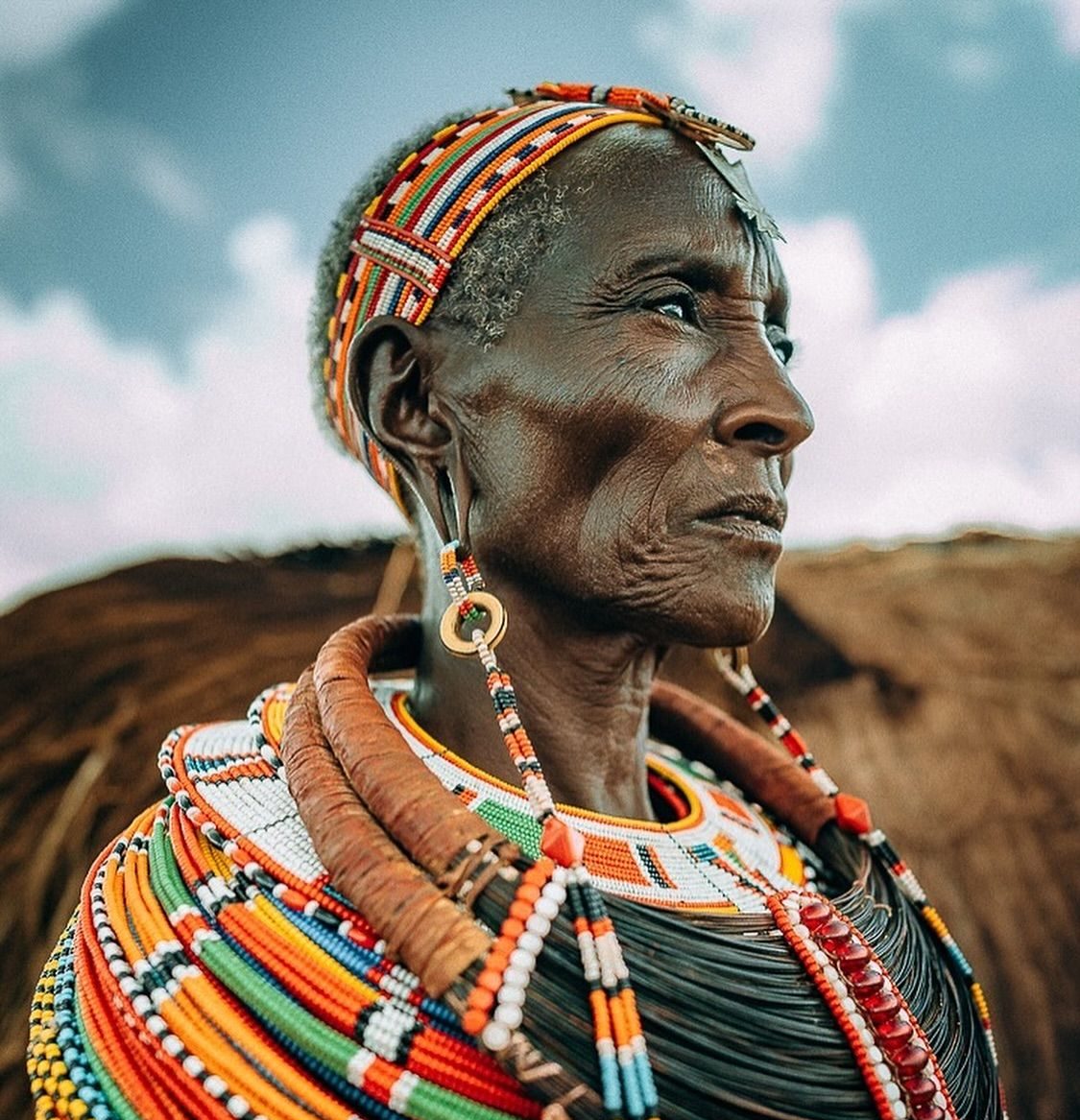
  • The Maasai – Noble

    Feature image @picture__guru

    A noble tribe and indigenous group in Africa, the Maasai are semi-nomadic people who settled in Kenya and northern Tanzania. They are one of the very few tribes who have retained most of their traditions. Side by side with nature, they live by herding cattle and goats which is their main source of food.  

    Mostly defined by their bright tradition wear which varies by sex, age and place. Formerly hunters, the Maasai are known as fearless and courageous people. The men are the hunters, taking care of their livestock and protecting their homes and communities. The women build the family home, cook and raise the children. 

    The noble tribe once occupied the most fertile lands until the armed British troops moved in. In 1904, they signed a first agreement, which resulted in losing the best of their land to the European settlers.

    In 1911, an agreement was signed by a small group of Maasai, where their best Northern land (Laikipia) was given up to white settlers. This was very controversial and the signatories did not represent the whole tribe. The consequences led to the Maasai loosing two-thirds of their lands and were relocated to less fertile parts of Kenya and Tanzania. 

    Today less land for the Kenyan population ultimately means less land for the Maasai people, their wildlife and livestock.  

  • Questions with Supastition – The Essence

    A highly respected MC, honest and raw. Supastition captures hip hop’s purest essence.

    What is your earliest memory of listening and being inspired by music?

    My earliest memories of music came from church because I grew up in a Christian household, and my grandfather was a pastor. The moment that I was inspired by music was watching Run DMC’s ‘Rock Box’ video for the first time on MTV.

    That was in 1984 and it was a mind blowing experience. I had seen rap videos before, but these guys were like superheroes to me. I wanted to be just like them. One year later, I wrote my first rhyme.

    How has your environment/experiences/people in your life, influenced your sound and passion?

    That’s a great question. I was born and raised in Greenville, NC. My family was always outspoken and didn’t have a filter when they talked to people. They would laugh and joke about everything whether it was politically correct or not.

    That’s were a lot of my natural wit and bluntness comes from in my music. Being raised around that environment makes you quick on your feet and able to respond fast. I think that’s why I started out as a battle rapper.

    Also, becoming a father at the age of 16 and going through a divorce in my early 20s, I had a different life experience than most people in my age range.

    What supernatural force would you impact on the world right now?

    My superpower would be compassion. That alone would be enough to change how we look at and treat each other. To instantly understand what someone’s feeling and not just the emotion but the reason behind it.

    If we had more compassion for each other than the world would be in very different place.

    Can you share a message or a piece of wisdom that you live by?

    There’s a quote that I have been living by. “The same God who led me to this will get me through this.” Your journey has purpose and intention even if it feels unclear sometimes.

    Whether it’s a challenge or new path, then that same higher power will also guide you, strengthen you, and get you to where you need to be.