Culture is Free

Archiving Culture

An online magazine archiving music, art and community worldwide

  • Pioneer – Questions with Jamel Shabazz

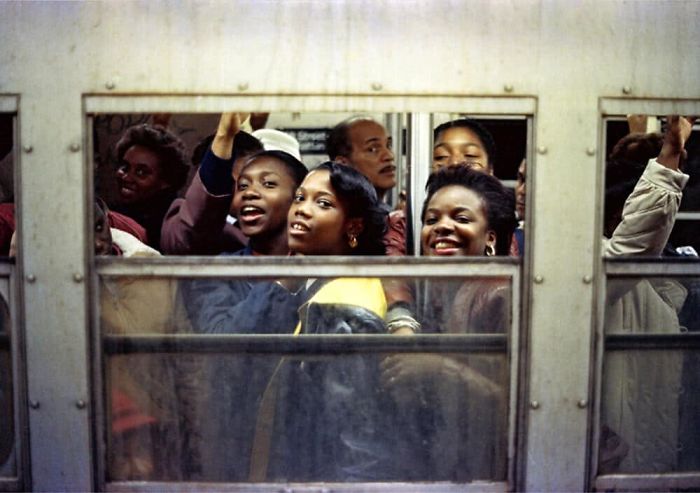
    Heart, soul and community. Pioneer. Jamel Shabazz is a photographer who showcases street style in 1980s New York. Each photo beautifully captures his community with pride. At a time of tension and poverty, Jamel Shabazz documented strength, love and the growing potential of the youth.

    Not only an amazing photographer, but a mentor who’s photographs challenge the history of violence and represent culture to inspire and empower generations.

    How has New York treated you, how has your environment influenced your work?

    New York is the cornerstone of the foundation for which I stand on today. The environment that I grew up in, had a huge influence on my creative process. For example, Prospect Park, in the Flatbush section of Brooklyn is a special place of mine that I like to refer to as “An Oasis in Brooklyn”.

    It became a space that I would visit throughout my life starting from when I was very young to the present, that was and still is a place I go to escape the hardships of the concert jungle, while seeking serenity.

    The park itself which stretches over 585 acres, is filled with picture perfect landscapes full of lush greenery, lakes, hills, wildlife, and a concert hall, that became my personal space where I would take thousands of photographs during a 40-year span.

    What I love most about the park is its diverse and wide range of subject matter that can be seen on any given day. During the early 1980s, I would take a number of my friends from the local high school there after class and have impromptu photo sessions, using the trees and lakes as natural backdrops.

    This organic environment created a unique feel to these images and upon examining the prints from those sessions, one would never know where we were taken, less lone in Brooklyn.

    Another environment that has had a major influence on my work is the Lower East Side of Manhattan, also known as “Delancey Street”. Unlike the tranquility of Prospect Park, this area is full of concrete, noise, and large crowds of shoppers on most days. Since the 1970s, Delancey Street was the shopping district where one could find the latest urban styles, at very reasonable prices.

    Most of the subjects that are fashionably dressed in many of my photographs from the 70s and 80s, purchased their clothing on Delancey Street; from footwear, sheepskin and leather bombers to Cazal glasses. As a photographer that was an ideal place to capture great photos, because there was always plenty of subject matter that I could identify with.

    Besides Prospect Park, some of my most iconic photographs were taken in that area. Because that old feel of the 70s still exists today, practically all of my commissioned fashion work is made on there, however it is slowly fading away with each new day.

    You served in the U.S. Army, did your experiences have an impact on your creativity? 

    Great question. While stationed in West Germany during moments of solitude, especially on lone guard duty I would often heavily reflect on life back in Brooklyn. I would think about all of my friends, along with trying to visualize what the buses, trains and streets looked like.

    It was during instances of this nature, that I realized that I never wanted to be without memory, so when I returned back to the states with a new perspective on life along with a new camera, I embarked upon a journey documenting all of the things I would often reflect on during my time overseas.    

    You have created many iconic images, what was and is your vision? Has it changed? 

    My primary vision during my early stages of development in the craft was to document the history and culture of life in New York City. I wanted to capture compelling moments that provoked thought and created opportunities for me to use the language of photography to connect with young people.

    Today my vision and objectives are the same, but now I have extended my journey throughout the country and around the globe.

    In your opinion, what is the difference between fashion and style?

    Another great question! Fashion in my opinion is the product, but style is how you define the fashion.  

    Black youth have been beautifully captured in your photography, how can we uplift and inspire the next generation? 

    Our youth are in great danger today like no other time in history. They have been born into a world that does not take to kindly to them. Their parents and grandparents in many cases, suffered during the AIDS and Crack epidemics, along with the war on drugs, racial profiling and mass incarceration. Many fell victim to an inadequate education, foster care and fratricide.

    Personally, I am pained by the countless videos that are being uploaded each day that show these graphic and terrible fights that young people are having with each other, with no regard for life. Back in the day you would only see males engaged in such activities, but now females alongside their male counterparts are fighting other groups that look just like them. 

    A lot of these altercations are taking place in the community where young children are witnessing this vicious behavior and rarely do you find anyone breaking up these fights. In many cases, the bystanders are only interested in video taping these situations so they could be uploaded to social media and shown to the entire world. I feel as a people, we are being set up for self- destruction.

    Gangs have now replaced the traditional family and violence and negative behavior are celebrated and rewarded on both television and in the music and film industry. We need to bring back the consciousness in hip hop that addressed social and political issues. 

    We also need all hands on deck, including all of the conscious artists regardless of genres for they have the magnetic attraction to get the attention of the younger generation, using their talents and platforms to mentor, engage the youth and give them guidance.

    The community as a whole must put away their fear and be proactive in trying to reach our youth. It is not an easy task, for there are other pressing issues like unemployment and an abundance of guns and drugs that are readily available on the streets.

    The task is challenging, but the clock is ticking and these times are very serious especially, now as we have to contend with those issues, toppled with the corona virus epidemic.

    There is an unprecedented amount of sickness and death in our community that has claimed the lives of thousands of people of color, many of them being elders and city workers who are often on the front lines that serve as the cornerstones of their families. We are in a state of emergency.

    The president has a disdain for people of color and racial hatred around the globe is on the rise. Again, we need all hands on deck like never before. As I type these words, the song “Self Destruction” by The Stop The Violence Movement back in 1991, resonates in my head. That message and the movement is of utter urgency today.   

    *all images courtesy of Jamel Shabazz

  • Impressive – Questions with Gnarly

    Producer and DJ, Gnarly is known for her impressive live finger drumming performances. Her weapon of choice is the Native Instruments Maschine, where she creates jazzy, soulful beats with a helping of funk.

    Her skills in music tech are vast and Gnarly is the lead Mix and Mastering Engineer post-production for the UK Beatbox Championships.

    What was the first album you bought and how do you feel about it now you are a producer? 

    To be honest I don’t remember the first album I bought. My sister used to buy a lot of tapes and CDs when I was a kid and she was a teenager.

    I remember spending hours making mixtapes /mix CDs from them of my favourite selections including TLC, Eminem, Blink 182 and Aaliyah to name a few. I don’t remember when I made the transition from listening to her music to buying my own. It seems like such an archaic way to listen to music now by having a physical copy.

    Most of the music you’d listen to in those days was chart music and it would be a dream to appear on Top of the Pops. With the internet, anyone can distribute their records now and have them heard all over the world. 

    Where do your ideas come from before you make a track? 

    Sometimes I’ll hear a song or sound in daily life that will inspire me such as music in a game or a line in a TV show or a post on Instagram.

    Other times I like to sit and actively listen to music for hours to draw inspiration from. I like to spend a lot of time experimenting, sometimes it turns out great sometimes it doesn’t. 

    Do you have a favourite performance of yours? 

    My favourite performance was being in the Finger Drumming Competition at Sample Music Festival in Berlin. It was my first international gig and first time in the scene, performing for people that were there specifically to see Finger Drumming. I got to network with a lot of other finger drummers too which was really cool.

    Are there any artists that you draw inspiration from? 

    Lido is my biggest inspiration. He’s a multi-instrumental live performing producer. His beats are kind of future RnB. Music that is full of emotion and well executed. Seeing someone create and perform with such good energy inspires and makes me want to level up.

    Do you have any advice for aspiring musicians and producers? 

    Stay consistent, practice daily and make an effort to be the best you can be. Set goals for yourself and be determined to achieve them.

  • Lyrical Master – Questions with O’hene Savant

    A powerful wordsmith and lyrical master, O’hene Savant‘s passion and skill is undeniable. A super duper talented lyricist, producer, and multi-instrumentalist.

    What in nature inspires you and why?

    All of nature. Sound, colours, silence. The wind, the rain, the sun, the sky and even things that are nature that we tend not to think of as nature. Like our minds. Art and human creations are not typically seen as “nature” but what is more natural than us humans expressing ourselves.

    Is there a person/place or moment that has defined your creative path?

    There is no person or place that has defined my creative path, because everywhere I have ever lived or even visited has contributed to my creativity. As a spiritual person, I recognize that I can be anywhere at any given time.

    What is your superpower? How do you intend to use it?

    My superpower is my ability to dissect things and learn them quickly. I plan on continuing to use it to propagate highly art from my community to the world, because culture changes minds, and minds changed are changed people, and changed people, change things.

    If you could go back to the future, what message would you take?

    If I could go to the future, if I am understanding you right. I would take the message of creativity.

    It is the closest thing to being godly. Being creative. This is why there is a saying “An idle mind, is the devil’s workshop. We need to be creative. It not only at its highest level gives insight, but it also gives us purpose, and what’s life without purpose?

    *If it’s okay, I would like to thank the interviewer for preserving the art of the interview. Your role is valuable and many are not recognizing the importance of legacy these days. People like yourself are the keepers of the culture and in this digital era this is becoming increasingly important. Wishing you all success you envision for your company.

  • Holistic – Questions with Ecotherapies

    An ancient traditional Chinese medicine, acupuncture is a form of holistic treatment based on the belief that Qi energy flows through the body.

    Inserting needles into specific points is said to bring the energy flow back into balance. Blood pressure, fertility issues, joint pain, arthritis and more can be treated with this age-old healing practice.

    Elaine Otrofanowei, founder and lead complementary therapist at Ecotherapies talks to Culture is Free about this holistic approach to life.

    What inspired you to become a Complementary Therapist?

    When my body decided it wanted to enter the menopausal stage of my life early, I came to the conclusion that this was a natural phase in a woman’s life and that I would use nutrition, herbs, supplements and complementary therapies to help me cope with the changes.

    My first complementary treatment I experienced was reflexology and then acupuncture. I found the combination of all of them really worked well for me. This encouraged me to retrain as an acupuncturist and study for a degree in Traditional Chinese Medicine and have since studied functional medicine.

    What can the holistic approach offer us in our daily lives?

    An holistic approach in our daily lives can help us cope with the side effects of modern life. Aiming to balance our life can counteract the effects of stress caused by the way we live our busy lives. Making changes in our diet, sleep, exercise and relaxation can have a positive effect on the quality of our lives and health.

    What do you feel are the common misconceptions around acupuncture?

    Often the public is under the misconception that acupuncture is hocus pokus or some kind of voodoo. Research has proved that on the insertion of the needles physiological changes occur in different areas of the brain and at the actual site of needle insertion.

    Changes such as an increase in blood supply, release of endorphins, the body’s’ natural painkiller and initiation of the ‘rest and digest’ response in the parasympathetic nervous system are the opposite to the fight and flight response/ stress response.

    Acupuncture is just one modality of Chinese Medicine; it also includes herbal, dietary and lifestyle medicine.

    What advice would you give someone who wishes to improve their lifestyle?

    The best advice I can give, when making changes is to start small. For example in your diet, start eating real food, ask yourself would your great-grandmother have recognised that food you are eating.

    If the food is from a packet it shouldn’t have more than 5 ingredients on the list on the back. Or make sure you always have some vegetables or fruit with each meal. Sleep; try to go to bed 30-60 minutes earlier if you’re a night owl or no screen time for a least an hour before going to bed.

    Exercise, find something you enjoy or do a small burst of exercise, dance around the kitchen while you wait for the kettle boil, whilst watching a TV program or do sum squats or sit-ups. Relaxation have a soothing bath with some lavender oil, do some deep breathing for 5 minutes everyday or meditate. Keep it simple, small and consistent.

    What is your fondest memory of your career?

    I specialise in fertility and women’s health, there are quite a few. Every time a patient gets a positive pregnancy test and when they meet their longed for baby for the first time. Or a patient with endometriosis is amazed the first time she experiences a monthly period without the usual excruciating pain.

    I love my job; it gives me such joy.

  • The Maasai – Noble

    Feature image @picture__guru

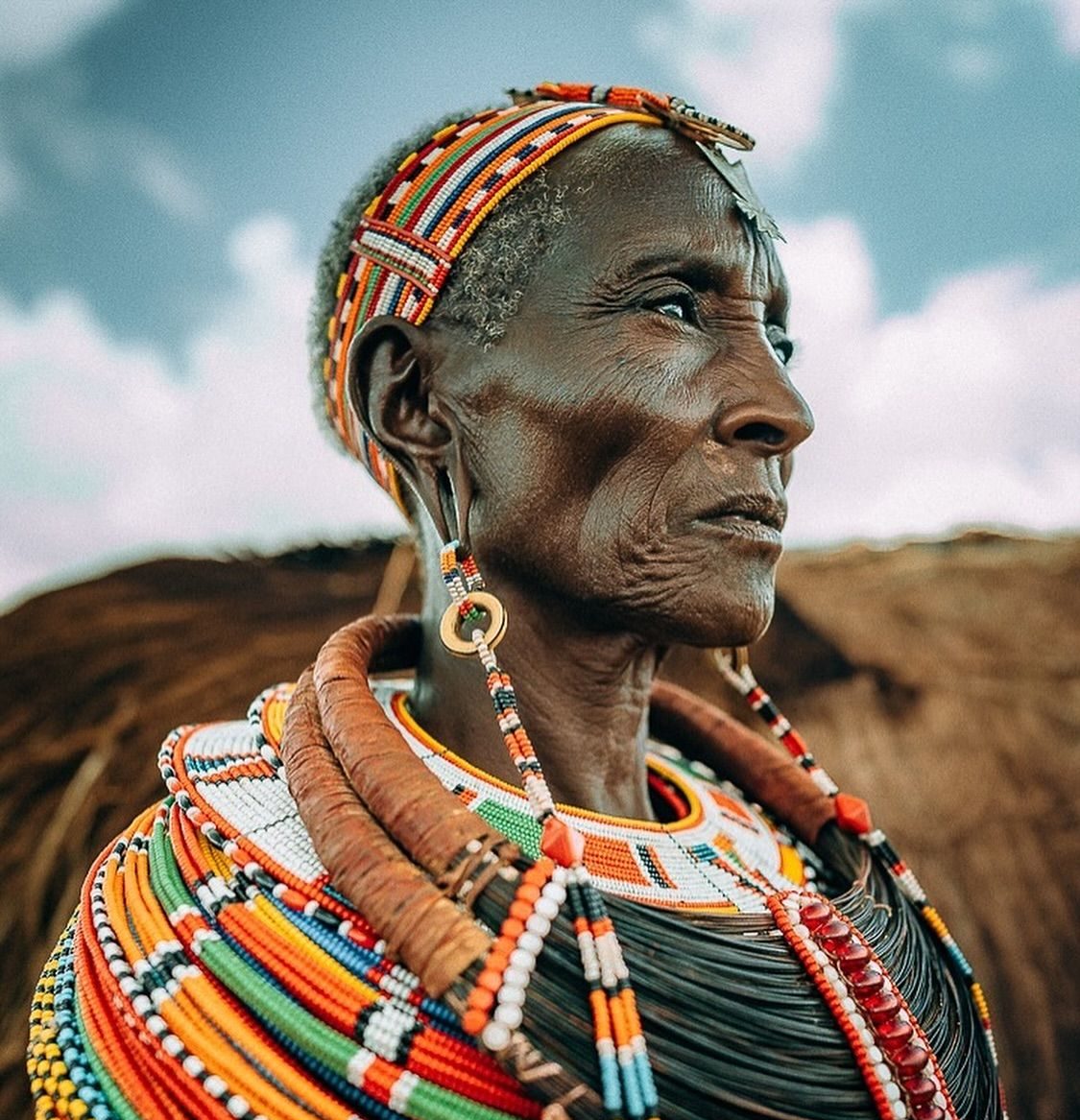
    A noble tribe and indigenous group in Africa, the Maasai are semi-nomadic people who settled in Kenya and northern Tanzania. They are one of the very few tribes who have retained most of their traditions. Side by side with nature, they live by herding cattle and goats which is their main source of food.  

    Mostly defined by their bright tradition wear which varies by sex, age and place. Formerly hunters, the Maasai are known as fearless and courageous people. The men are the hunters, taking care of their livestock and protecting their homes and communities. The women build the family home, cook and raise the children. 

    The noble tribe once occupied the most fertile lands until the armed British troops moved in. In 1904, they signed a first agreement, which resulted in losing the best of their land to the European settlers.

    In 1911, an agreement was signed by a small group of Maasai, where their best Northern land (Laikipia) was given up to white settlers. This was very controversial and the signatories did not represent the whole tribe. The consequences led to the Maasai loosing two-thirds of their lands and were relocated to less fertile parts of Kenya and Tanzania. 

    Today less land for the Kenyan population ultimately means less land for the Maasai people, their wildlife and livestock.  

  • Questions with Supastition – The Essence

    A highly respected MC, honest and raw. Supastition captures hip hop’s purest essence.

    What is your earliest memory of listening and being inspired by music?

    My earliest memories of music came from church because I grew up in a Christian household, and my grandfather was a pastor. The moment that I was inspired by music was watching Run DMC’s ‘Rock Box’ video for the first time on MTV.

    That was in 1984 and it was a mind blowing experience. I had seen rap videos before, but these guys were like superheroes to me. I wanted to be just like them. One year later, I wrote my first rhyme.

    How has your environment/experiences/people in your life, influenced your sound and passion?

    That’s a great question. I was born and raised in Greenville, NC. My family was always outspoken and didn’t have a filter when they talked to people. They would laugh and joke about everything whether it was politically correct or not.

    That’s were a lot of my natural wit and bluntness comes from in my music. Being raised around that environment makes you quick on your feet and able to respond fast. I think that’s why I started out as a battle rapper.

    Also, becoming a father at the age of 16 and going through a divorce in my early 20s, I had a different life experience than most people in my age range.

    What supernatural force would you impact on the world right now?

    My superpower would be compassion. That alone would be enough to change how we look at and treat each other. To instantly understand what someone’s feeling and not just the emotion but the reason behind it.

    If we had more compassion for each other than the world would be in very different place.

    Can you share a message or a piece of wisdom that you live by?

    There’s a quote that I have been living by. “The same God who led me to this will get me through this.” Your journey has purpose and intention even if it feels unclear sometimes.

    Whether it’s a challenge or new path, then that same higher power will also guide you, strengthen you, and get you to where you need to be.

  • Questions with Eric Roberson – Poetic Soul

    Soulful melodies and poetic lyrics, Eric Roberson is an independent singer-songwriter and producer. 2x Grammy nominated, he has written or produced for a number of artists such as Musiq Soulchild, Vivian Green, Jill Scott and Robert Glasper.

    Honest and sincere, Eric Roberson’s musical catalogue is rich with poetic expression and created straight from the heart. 

    What impact has soul music had on your life? 

    It’s been the soundtrack to my life. For every up and down I have experienced, it has been there. To me soul music covers multiple genres. So songs that fit the term soul music, changed my life. They made me a better person.

    Is there an experience or event that has shaped your journey in music? 

    Too many to name but I will mention a few that come to mind. Hearing J Dilla for the first time. Working at DJ Jazzy Jeff’s A Touch Of Jazz studios in the late 90’s. Going back to college after getting dropped from my record deal. So many things.

    What song symbolises your life right now? 

    I am part of DJ Jazzy Jeff’s Playlist Retreat and we did an album called, Chasing Goosebumps a couple years ago. On it is a song called, Die Empty. I’m at a point now where I ain’t holding onto anything creatively. If I feel it, I let it fly. Same thing with love. 

    What inspires the feeling in the music you create?

    Might sound cliche but life experiences really shape it mostly. I made a promise to God many years ago that if I felt something I would write about it. I don’t believe in writer’s block. Even at a traffic light, I’m watching the old man crossing the street and figuring out the song his presence is giving me. 

    Do you create in the daylight or the moonlight? – does it make a difference? 

    It used to make a big difference. I am a midnight marauder by nature but kids will change all of that.  Now I create whenever time allows me. Plus I’m getting older so the price is getting steeper for those all-night sessions, hahahaha.

    Growing up, what artist(s) influenced you? 

    Stevie Wonder, Commissioned, A Tribe Called Quest, Bill Withers, Prince, Sade, and a million others hahaha…. I listened to everybody.

    What does freedom mean to you? 

    Clarity. As a writer, creative freedom means everything. I can create without compromise. My artistry has grown to more compliment my life rather than control it. Having a personal definition of success is freedom to me. Yeah, clarity.

    Is there a movement or person, past or present that you respect and admire?

    I could name so many but Bill Withers comes to mind. I loved how he carried himself on and off stage. He was about the art but didn’t let the business get the best of him. If I could sit and talk in the studio with anyone it would be him. Sadly, I never got the chance to.

  • Questions with Kytana Winn – Fusion

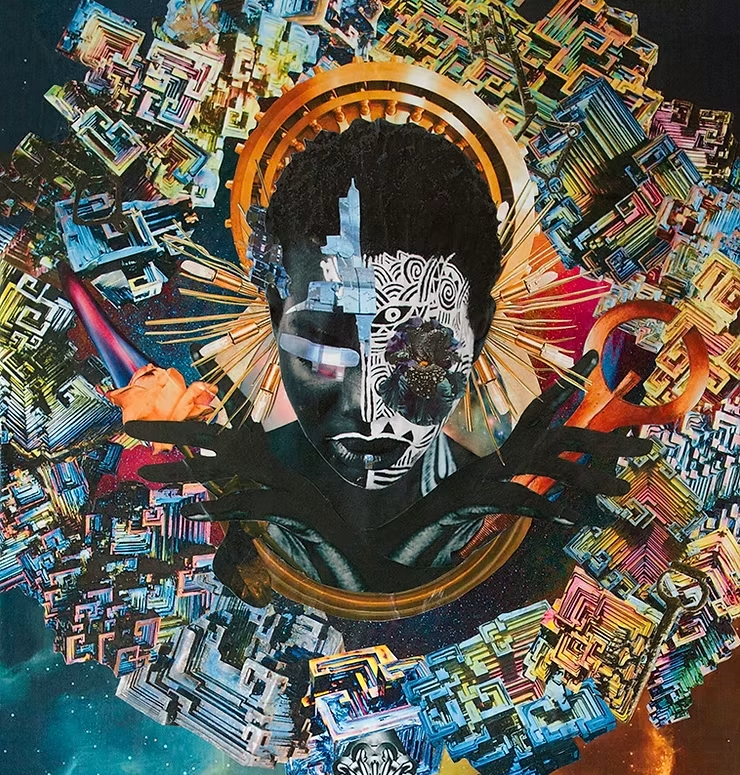
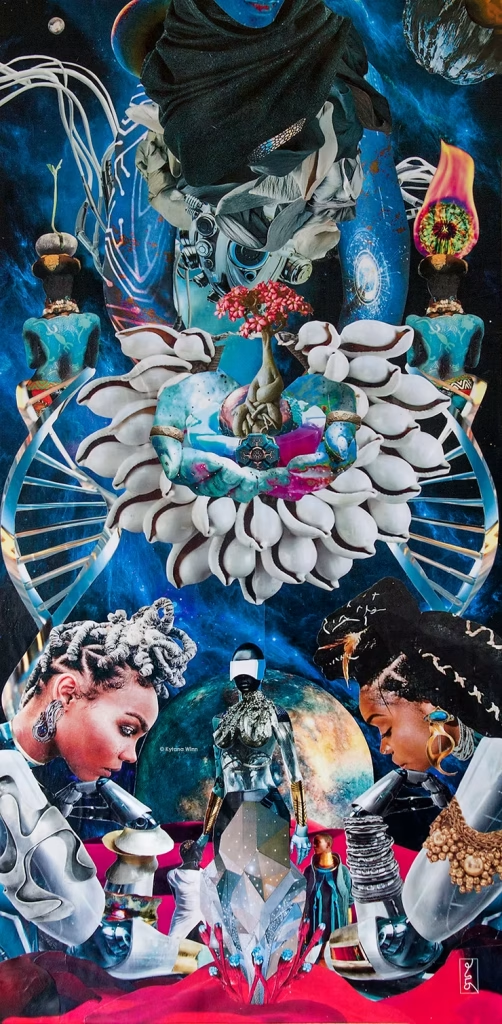
    Kytana Winn‘s work is a fusion of tribal, science fiction and the great unknown.

    Kytana embodies the new surreal. Her work is beautifully layered and sincere, it can be compared to ancient tribes and their connection to the universe. Her magnificent art bridges the gap between nature, modern society and the future.

    Can you explain the concept of Afrofuturism and your approach within your work?

    The term Afrofuturism was first coined by scholar Mark Dery in his 1993 essay, “Black to the Future,” as “speculative fiction that treats African-American themes and addresses African-American concerns in the context of 20th-century technoculture and, more generally, African-American signification that appropriates images of technology and a prosthetically enhanced future might, for want of a better term, be called Afrofuturism.

    [However], the notion of Afrofuturism gives rise to a troubling antinomy: Can a community whose past has been deliberately rubbed out, and whose energies have subsequently been consumed by the search for legible traces of its history, imagine possible futures?”(Dery, 180)

    I believe after this terms conception with skepticism, the umbrella that is Afrofuturism has risen to answer Drey’s question with a resounding yes and creating the core idea that Afrofuturism reimagines and then subsequently informs futures of what our diaspora is capable of achieving and creating.

    Philosophically culturally, spiritually and technologically outside of Eurocentric/Western constructs and ideals of Blackness. 

    Recently I watched a talk by scholar and professor Lonny J Avi Brooks, hosted at Creative Museum HQ  in Oakland, and he notably stated that,

    “The Black experience is futuristic. On some level, it was always a science fiction horror story and another level a story about alien abduction, and because of this Black people have always been futurists. They had to be. Imagine being taken from your home planet in  West Africa with the latest in bondage technologies, kidnapping them and dislocating them from their home planet, taking them to an alien new world where they had to innovate and not be allowed to speak their own languages, celebrate their rituals, or even play their music…”

    “…They had to adapt to a new religion and fuse it with their own rituals under the radar. Cruelty has shaped the Black Diaspora and part of Afrofuturism is reinventing and reclaiming the trauma past atrocities against the queer and Black Diaspora  and augmenting new pathways, new alternative memories of the future.”

    This really struck me in a profound way because I had never really associated Afrofuturism being practiced so far in the past but find that these themes of augmenting, reshaping, and surpassing slavery trauma to be jumping off points in this artistic movement to later then subvert Eurocentric ideals altogether.

    Afrofuturism also lends a powerful hand into Black Feminism, which is the section I’m creating and exploring in. I’m continuously contemplating and rotating the multifaceted idea of The Divine Feminine in Space, after reading Yatasha Womack’s Afrofuturism: The world of Black sci-fi and fantasy culture. In chapter 8, The Divine Feminine in Space,  Ytasha Womack describes this term best with the assertion that:

    “Afrofuturism is a home for the Divine Feminine by principle, a Mother Earth ideal that values nature, creativity, receptivity, mysticism, intuition, and healing as partners to technology, science, and achievement. The divine feminine is the other side to the information-gathering process, and tapping into it is a process of choice for many Afrofuturist…”

    “…There’s a widespread belief that humankind has lost connection to nature, to the stars, to a cosmic sense of self, and that reclaiming the virtues of the divine feminine will lead to wholeness. Many men in the genre embrace the principle as much as women do (Womack,103)”

    So within my work, I try to approach this idea with internal musings like, What would a divine feminine in space look like? What does the reconstruction of the black female body rooted in cybernetic evolution inspire? What kind of life-changing adventures can the Black female have in space?

    From there I use my imagination, and experience in my specific diaspora as an African-American female to create answers in the form of, hopefully, beautifully lush and complex collages.

    What is your driving force?  

    Representation. Representation. Representation. 

    To better understand the significance Afrofuturism has on the Black female body, we have to be aware of the history of how the Black female body has been perceived in the art that was predominantly created and viewed by Eurocentric individuals. In Afrofuturism, the black woman’s image is not held to western standards and stereotypes. Nor is our body held to the confines in what it means to portray ‘’acceptable’’ Blackness.

    However, outside of Afrofuturism, these ideals are not so easily applicable. There is without a doubt still racist and negative stereotypical connotations being applied to the Black female body, that includes but not limited to promiscuity, eroticism, and savagery.

    Historically the root of these negative stereotypes can be connected to the effects of the Pan-African Diaspora during the colonization era between the 1800 and 1900s.

    A common and widely referenced example of the core source of the degradation of the Black female body in particular can be seen in the icon case of Saartjie or Sara Baartman. 

    Baartman was exhibited as a freak show attraction in 19th-century Europe under the name Hottentot Venus because of her ‘abnormal’ sized buttocks, breast and genitalia.

    She was poked and prodded and became an icon or reference for salacious thought and acts with black females. After her death in 1815, she was put under autopsy and claimed to be of the lowest specimen to that of an ape and or orangutan. Baartman became associated with not being a woman but a primitive and reduced sex-object.

    Another iconic reference of the Black female body being associated with sexuality and derision is Manet’s voyeuristic 1863 painting Olympia. By the nineteenth century, the black female body in art became used as a signifier/motif of sexuality and promiscuity. In the painting, the nude caucasian prostitute lounged in a day bed with her hand strategically laid across her genitalia and staring directly at the viewer.

    In the background, a black maid or servant is presenting the nude prostitute with a bouquet of flowers. So even though the black maid or servant is completely clothed, the level of voyeurism the painting lends to the male gaze automatically puts the Black female form in associates of sexual objectification.

    There are many more examples to pull from but what it boils down to is that the Black female form has been unfairly balanced on the extreme end of the scale of sexuality and that we are still seeing this unbalance today, intersectionally woven into modern visual culture.

    This drives me to create the collages I do. My intent is to create alternate realities where the black female form, nude or clothed, can be a signifier of exploration, knowledge, peace, wisdom, expansion, ingenuity, and innovation. 

    Also, to be very clear,  I’m not saying that Black females cannot have and express sexuality. To do that would then tip this metaphorical scale on the other extreme end that is repression, which is unfair and counterproductive.

    What I’m saying is that there needs to be a recalibration of said imbalance and adding more representation of what the Black female form can imply in other arenas like Afrofuturism is a healthy start. 

    Your Art is striking, how do you use colour?

    Honesty I’m awful with color theory! I rely on my best friend who is a painter to help me out in this area during our critiques. Before collaging, my main artistic practice was in Black and White Portraiture Photography. So naturally, my eye is more attuned to seeing gradients and contrast. Therefore, when I’m collaging I’m more looking at how the gradients of color can compositionally create depth and movement.

    Also, because I am 95% of the time at the mercy of found images, I don’t start with a color palette or mood. Instead, I gather core images that I want to use and determine from their colors what the overall gradient should stay in. 

    In terms of feeling, I’m personally obsessed with the colorfully rendered Hubble Telescope images of space and how they always seem to pull me into an overwhelming sense of wonderment, fascination, mesmerization, and mysticism.

    So intrinsically I think I try to create those same feelings in each of my pieces. If I look at a completed piece and feel none of the said feelings then I know I’m missing something or need to rework the piece altogether. 

    How would you describe the Black females in your work? 

    I would describe them as beings engaged in action, autonomy, and agency. Even if their faces are obscured behind a mask, only have a head and nobody or seen as shadowy figures, they are actively occupying their space with full force and weight. They have power, knowledge, and wisdom to share if only you as the viewer are willing to face them and listen. They are Divine Feminines in Space.

    Each piece of your Art includes a written narrative, how important is this to your practice?  

    The narrative texts added are my musings actuated into a stream of open-ended thoughts. This process usually starts when I’m beginning to combine core images together and as they start to fit together they then inform me what to add next in terms of imagery motifs, adornments, figurative actions/placement, etc. etc. By the end, I have a collage that is surreal in nature and can be intimidatingly visually packed.

    I know what I’m looking at because I’m the creator but for a viewer, the first look over can be overwhelming. So much so that I use these open-ended narratives as a jumping-off point to create a semblance of direction in digesting the piece. If this helps the viewer then great, and if the viewer says “ no, I think this is what happening…” then to that I say “ even better”! I love to hear new interpretations of my work that I may not have considered. 

    Plus, adding narrative text is another way for me to tap into combinatory play. I make collages, photograph portraits, build ceramic coil pots, construct furniture for my room and write short fictional text. I am a creative and love to create in every aspect of my life.

    What does the future hold for the Black Woman? 

    That’s a big question that keeps circulating in my mind.  I don’t have a third eye, so I can’t give a true clairvoyant answer but I wholeheartedly believe that the Black Woman has been and is on the voyage to transcendence.

    Just look at recent instances like  Janelle Monae’s Dirty Computer visual treatise, Gugu Mbatha-Raw as superhero powered Ruth in Fast Color, and N.K Jemisin’s Broken Earth science fantasy novel trilogy.

    These are all Black women real and fictional coming into their own magic and science. Younger and younger, quicker and quicker, we are realizing our inherent potential and soon others will agree without derision.

    Below are artists that I take inspiration from and have been making work that directly leans into ideas of Afrofuturism. So please readers, take a look at their work and support them any way you can. 

    Joshua Mays. Wangechi Mut. Cyrus Kabiru. Osborne Macharia. AiRich. Manzel Bowman. Taj Francis. Komi Olaf. Tyra White Meadows. SReal. Lina Iris Viktor. Kaylan Michael. Tahir Carl Karmali.

    All images by and courtesy of Kytana Winn

  • Alice Coltrane – Divine

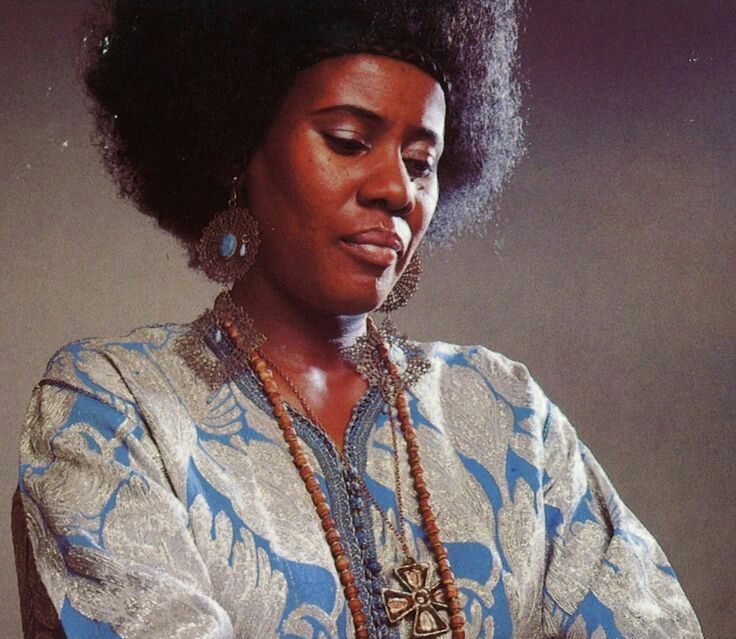
    Alice Coltrane Turiyasangitananda was a divine jazz pianist, organist, harpist, singer, composer and swamini.

    Alice was a musical prodigy, learning piano from an early age, and playing organ in Mount Olive Baptist Church by the age of nine.

    The legendary jazz saxophonist and composer John Coltrane was her soulmate, husband and collaborator. Together they embarked on a deeply spiritual journey of musical exploration. They had four children before John passed away in 1967.

    After her husband’s death, Alice suffered from severe weight loss, sleepless nights and hallucinations. Alice spent focused time in isolation, fasting, praying, and meditating.

    In the 1970s, she became a disciple of Swami Satchidananda and took on the name Turiyasangitananda. 

    Turiyasangitananda translates as the Transcendental Lord’s highest song of Bliss. She became a spiritual leader herself and and continued to record devotional music for her community, she left her physical form in 2007.

    Alice Coltrane’s catalogue of music is divine.

  • Questions with the Legendary Masta Ace

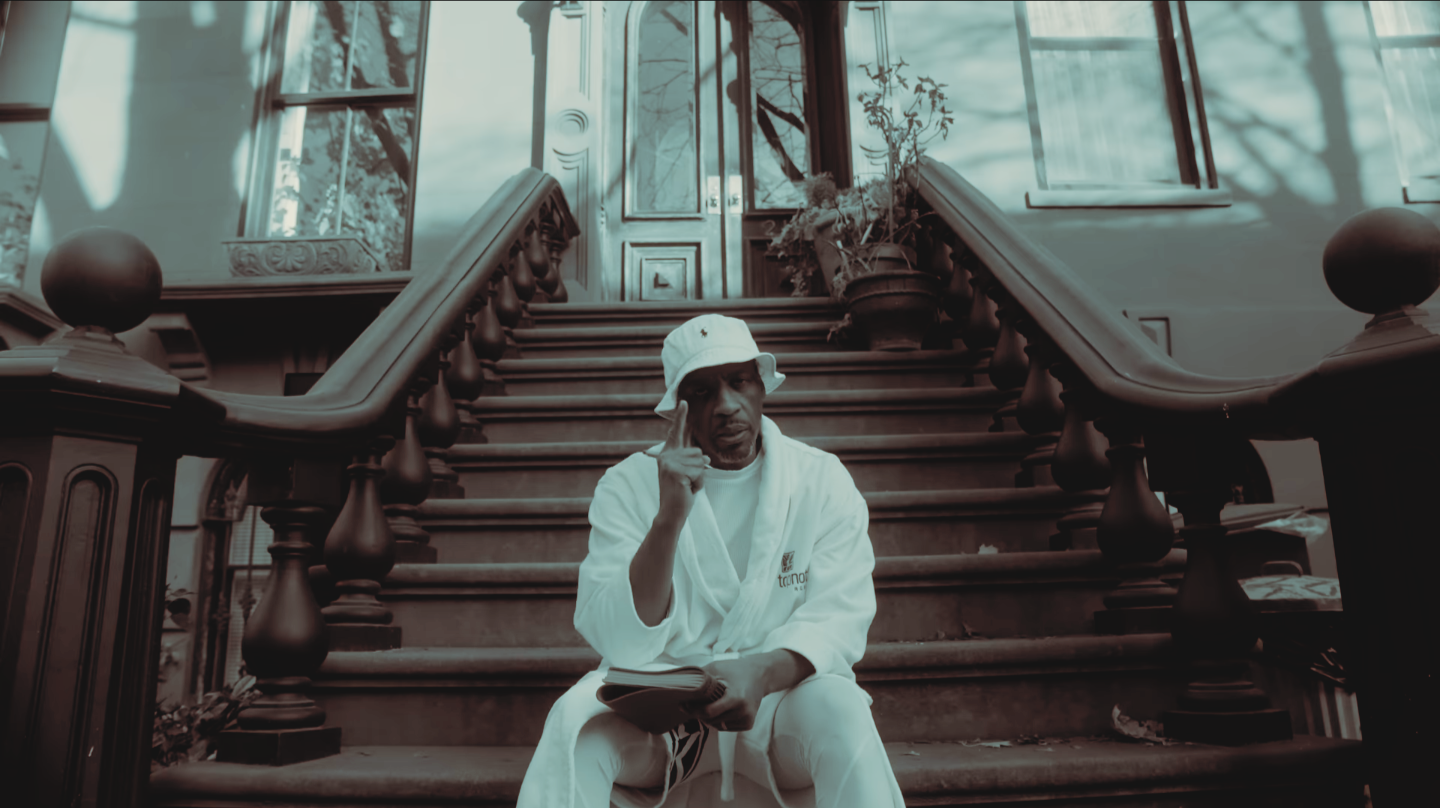
    Legendary Brooklyn MC and producer Masta Ace talks to Culture is Free

    With a music career spanning over more than three decades, Masta Ace is truly an iconic contributor who continues to create and share his art. 

    Known for his influential hip-hop lyricism, sincerity and all-round love for his fans, it’s no wonder he continues to grow with supporters. 

    Culture is Free would like to declare themselves a huge supporter and we salute Masta Ace for his contribution to music and culture! 

    What makes you happy and thankful?

    My family and health. My wife and daughter are what I’m most thankful for and the fact that I am able be strong and healthy considering my age after all these years.

    What in nature inspires you?

    Nature’s super foods inspire me! The fact that everything our bodies need to remain healthy and in a state of wellness grows naturally on earth is amazing and inspiring to me.

    Tell us about yourself and your art

    I currently writing a hip-hop musical in conjunction with a company called Rhymes over beat. It’s going to loosely based on my albums Disposable Arts, A Long Hot Summer and The Falling Season.

    • The Falling Season

    What is your greatest achievement to date?

    I’m still working towards that greatest achievement. Time will tell.

    What song best describes your life?

    Take a Walk. On that song I play the role of tour guide taking the listener through my neighbourhood in Brownsville, Brooklyn.

    If you could build a time machine what time would you travel to?

    I would travel forward a hundred years to see if racism, greed and violence was over.